Article by: Musse Bashir Ahmed
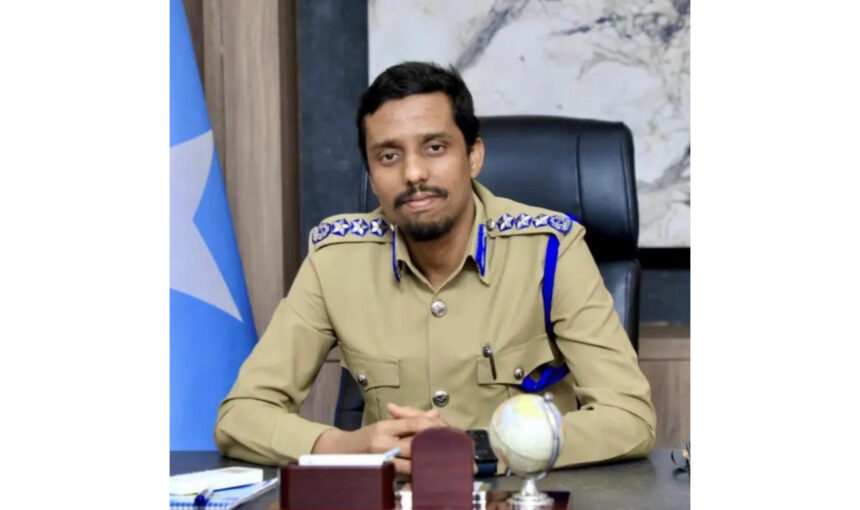
General Asad Osman Abdullahi stands as one of the most important security figures in modern Somalia, and his work reflects a deep commitment to rebuilding trust between institutions and the people they serve. His leadership has not only shaped policing structures at the national level but also inspired hope among citizens who long for stability, dignity, and peace. He represents a generation of leaders who believe that security is not only about force but also about connection, understanding, and shared responsibility.
One of his most visible achievements was transforming Mogadishu into a city that began to shine again. Under his leadership, the capital witnessed a renewed sense of order and confidence. Streets that once symbolised fear gradually became places where families could move more freely, and businesses could operate with less anxiety. His focus was not simply on deploying officers but on restoring pride in the city. Clean uniforms, disciplined conduct and visible patrols sent a message that public safety mattered and that the police existed to protect, not intimidate.
He is widely recognised as one of the most influential police chiefs Somalia has ever produced. In his case, effectiveness did not come from authority alone but from example. Officers under his command often speak about his work ethic and his insistence on professionalism. He worked to unify the police structure and reduce internal divisions so that the force could operate as a single body with a shared mission. This unity strengthened coordination, improved response times and built a culture of accountability that benefited the entire country.
A defining feature of his service has been his engagement with the young generation. He understood that lasting security depends on making the youth feel included rather than alienated. Through outreach programs, public dialogues and mentorship initiatives, he encouraged young people to see the police as partners in nation-building. His message was simple yet powerful. A peaceful Somalia requires energy, and his hope was (and is) that young citizens would reject extremism and choose constructive paths.
His role in counter-extremism efforts further demonstrates his strategic vision. Instead of relying only on enforcement, he supported preventive measures that addressed root causes. Community cooperation, intelligence sharing and early intervention became central pillars of his approach. He worked to make the police more approachable and more human. By encouraging officers to be friendly to civilians, he reduced fear and suspicion. Citizens felt safer reporting threats and sharing security information because they trust the people receiving it. This shift strengthened national resilience and showed that compassion and firmness can exist side by side.
He also worked tirelessly to make life easier for officers on the ground. Improvements in working conditions, training and operational systems allowed the police to function more effectively. A supported officer is a better protector, and he championed reforms that recognised this reality. His leadership emphasised dignity within the force and respect toward the public, creating a healthier relationship between the institution and society.
His achievements earned international recognition, including a medal following a survey conducted through Interpol that highlighted his contribution to modern policing standards. Such acknowledgement reflects not only personal success but also a positive image of Somalia’s progress in security reform.
At his core, he is driven by a vision of a peaceful Somalia, and his career has been a continuous struggle toward that goal. He speaks often about unity, patience and shared responsibility. His story is not just about rank or title. It is about a man who chose service over comfort and who believes that every improvement in safety is a victory for the nation. His legacy continues to remind Somalis that determined leadership guided by humanity can light even the darkest chapters and open the door to a future defined by peace.